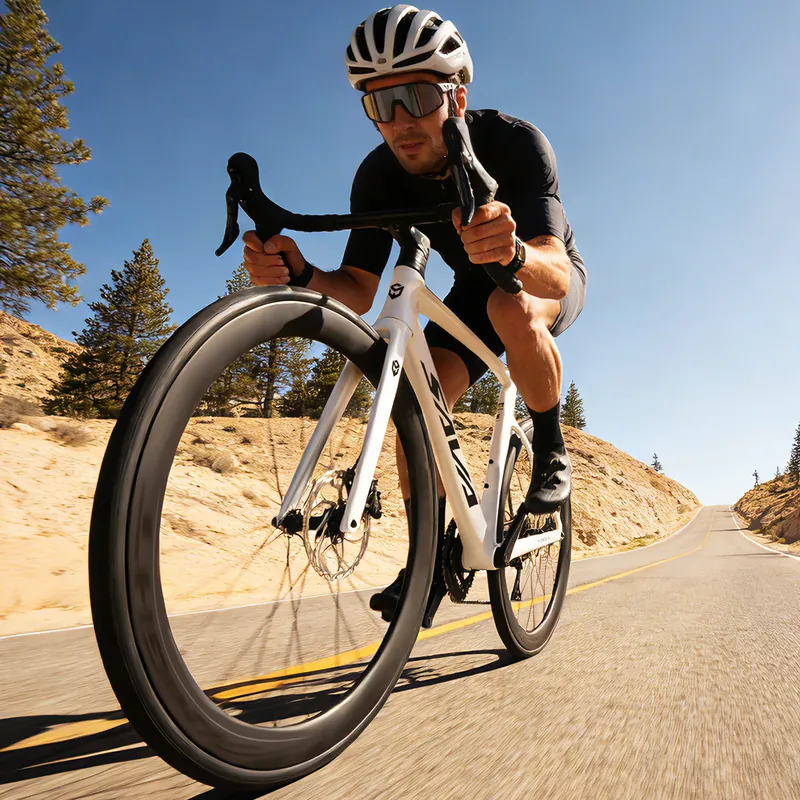
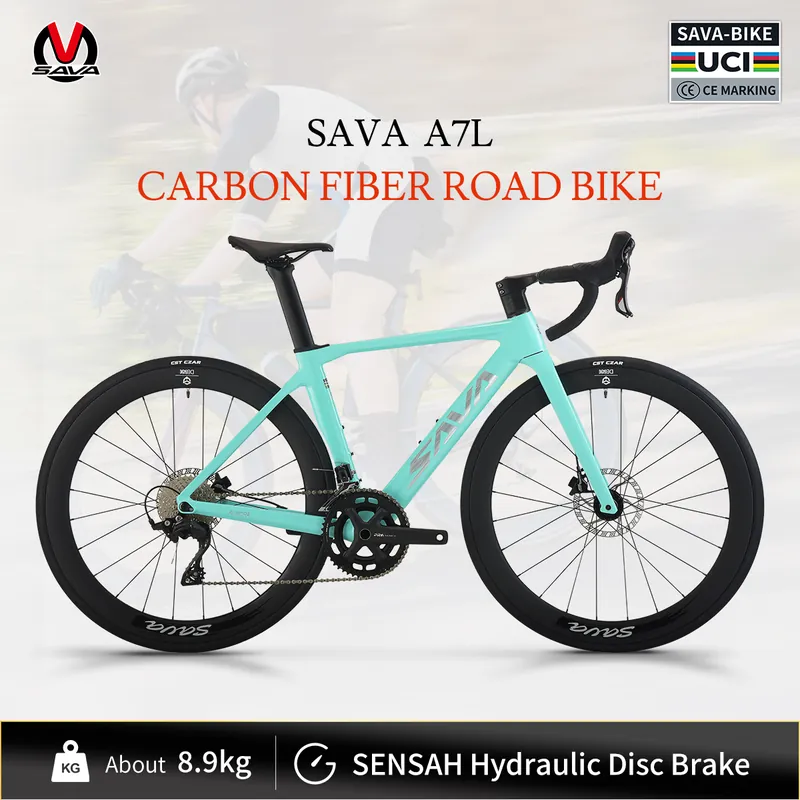
SAVA carbon road bikes: A7L specs and UK value
SAVA is one of the direct-to-consumer manufacturers that has disrupted the entry-level and mid-range carbon road bike market. In the UK, high street bike brands frequently charge upwards of £2,200 to £3,000 for a full carbon road bike equipped with hydraulic disc brakes and a modern 2x11 or 2x12 groupset. SAVA, by contrast, lists models like the A7L in our catalogue between £1,150 and £1,320.
Search queries for `SAVA A7L` and `SAVA road bikes` have been climbing steadily in the UK as riders look for carbon performance on an aluminium budget. Here is a realistic, fact-based breakdown of what SAVA bikes deliver, where their value lies, and what you need to inspect when assembling one.
The core specification: Toray T800 carbon fibre
The defining element of any SAVA road bike is its frame and fork material:
- Toray T800 carbon composite: SAVA manufactures frames from Japanese Toray T800 carbon fibre weave. This is a legitimate high-tensile carbon grade widely used in aerodynamic aerospace and sports equipment.
- Weight: Complete SAVA carbon road bikes in this tier typically weigh between 8.7 kg and 9.4 kg depending on frame size and pedal choice. Compared to equivalent £1,200 aluminium bikes (which frequently tip the scales at 10.2 to 10.8 kg), a sub-9.5 kg carbon machine offers noticeably quicker acceleration and punchier climbing.
- Internal cable routing: Clean aerodynamic lines with cables routed through the down tube and chainstays, reducing drag and protecting inner cables from British road grit and rain.
- Integrated aerodynamic cockpit: Aerofoil head tube and profiled seatstays designed to reduce turbulence around the rear wheel.
Drivetrain and gearing: 24-speed (2x12) setup
The SAVA A7L series models featured in our catalogue specify a 24-speed drivetrain (2x12 setup).
A 12-speed rear cassette paired with a compact front chainset (typically 50/34T) gives road riders two practical advantages:
- Tight cadence steps: Having 12 sprockets across an 11-30T or 11-32T cassette means the jumps between adjacent climbing gears are small (often just 1 or 2 teeth). You can always maintain your optimal 85-95 RPM pedalling cadence whether riding on a flat headwind or grinding up a 7% Surrey hill.
- True climbing gear: A 34T inner ring paired with a 30T or 32T largest rear sprocket provides an almost 1:1 gear ratio. Even for leisure sportives or riders rebuilding cardiovascular fitness, steep climbs can be tackled seated without straining knees.
Brakes: mechanical vs hydraulic disc
Most SAVA carbon bikes in the sub-£1,400 tier feature dual mechanical or hybrid cable-actuated disc brakes mounted to standard flat-mount dropouts:
- Disc brakes provide consistent stopping power in wet UK weather, where traditional rim brakes lose significant initial bite on wet carbon rims.
- Cable-actuated discs are simpler to maintain at home than full hydraulic systems, requiring only a 5mm hex key to adjust cable tension as brake pads wear.
- Standard 160mm front and 140mm rear rotors provide ample heat dissipation on long descents.
Tyre clearance: running 28mm tyres on UK tarmac
British B-roads and rural tarmac are notoriously abrasive, with frequent potholes, loose chipping surfaces and patched asphalt:
- Stock tyres: SAVA road bikes usually ship with fast-rolling 700x25c Continental or CST clincher tyres, optimal for smooth tarmac and track surfaces.
- Clearance for 28mm: The A7L carbon frame and carbon fork clear modern 700x28c tyres comfortably with ample clearance around the seatstay bridge and chainstays.
- Lower pressure benefits: Upgrading to 28mm tyres allows you to run lower tyre pressures (between 70 and 80 psi, depending on rider weight) rather than the harsh 100+ psi required by older 23mm tyres. This reduces fatigue on three-hour weekend rides, dramatically improves cornering grip on damp winter tarmac, and cushions road buzz transmitted through the stiff carbon frame.
Sizing and geometry: race vs endurance
SAVA frames feature an aerodynamic, sport-focused geometry. The stack-to-reach ratio sits around 1.42, which places the rider in a lower, more aggressive aerodynamic position compared to upright endurance road bikes.
- 47 cm – 50 cm: Suitable for riders 155 cm to 168 cm (5'1" to 5'6").
- 52 cm – 54 cm: Suitable for riders 168 cm to 178 cm (5'6" to 5'10").
- 56 cm – 58 cm: Suitable for riders 178 cm to 188 cm (5'10" to 6'2").
Before ordering, measure your inside leg and calculate your baseline saddle height using our free bike size finder. If you are between two sizes, we recommend choosing the smaller frame size: on a carbon road bike, a smaller frame is stiffer, lighter, and can easily be tailored with a slightly longer stem, whereas an oversized top tube cannot be shortened.
What to check during unboxing and setup
A boxed carbon bicycle requires careful, deliberate assembly. Three critical rules apply:
- Use a calibrated torque wrench: Never tighten stem faceplate bolts, seatpost clamps or handlebar bolts by feel. Toray carbon can be crushed by overtightening. Fasteners should be tightened strictly to 5-6 Nm. See our assembling a bike bought online guide for the complete checklist.
- Carbon assembly paste: Never grease a carbon seatpost. Use friction paste (carbon grip compound) inside the seat tube to prevent slipping at low torque.
- Gear indexing check: Shipping can occasionally cause a minor knock to the rear derailleur hanger. Perform a five-minute indexing tune before your maiden road ride to ensure crisp shifts across all 24 gears.
The verdict: who is the SAVA A7L for?
If your budget is capped around £1,200 to £1,400 and your goal is a genuine lightweight carbon road bike with disc brakes for weekend club runs, sportives or fast fitness riding, SAVA represents one of the strongest specification-per-pound ratios available in the UK.