UK e-bike law: what 250W and 15.5 mph mean
Most of the electric bikes sold online in the UK are not, strictly speaking, legal to ride on a public road. This is not a detail. It is the single most important thing to understand before you buy one, and it is the question our customers ask most often in the shop.
This guide explains what the law actually says, in plain English, and then applies it to the kinds of bikes we list so you can tell which side of the line a particular model falls on.
What counts as an electric bike in UK law
The UK does not regulate "e-bikes" as a category. It regulates a specific thing called an Electrically Assisted Pedal Cycle, or EAPC. If a bike meets the EAPC definition it is treated as a bicycle: no licence, no registration, no insurance, no helmet requirement, and you can ride it wherever bicycles are allowed.
If it does not meet the definition, it is legally a motor vehicle. That changes everything: you need a licence, insurance, tax, a registered plate, and a helmet, and you cannot ride it on a cycle path.
To be an EAPC, a bike has to meet all of these:
- Pedal assistance only. The motor must help you when you pedal. It cannot propel the bike on its own with a throttle, except in the specific case of a walk-assist function that only works while you are pushing the bike.
- Maximum continuous rated power of 250 watts. Not peak power, not "250W nominal, 1000W peak". The continuous rating of the motor.
- Assistance cuts out at 15.5 mph (25 km/h). Above that speed the motor must stop helping. The bike can go faster downhill, but not under power.
- The motor must not exceed 250W even briefly in normal use, which in practice means bikes advertised as "1000W" are not EAPCs.
- Maximum weight of 40 kg for the bike, and it must have pedals.
- The rider must be at least 14 years old.
Everything else is decoration. Lights, a display, a battery gauge, a suspension fork: none of it affects the legal status.
The short version: if the listing says 250W and mentions assistance stopping around 25 km/h, it is very likely an EAPC. If it says 500W, 750W, 1000W, 2000W or 3000W, it is a motor vehicle in the eyes of UK law, whatever the seller calls it.
Why so many listings say 1000W
Because the bikes are built for markets where the limits are different, or for private land, and the listing is written for a global audience. A 1000W motor is not a defect and it is not a con. It is simply outside the EAPC definition.
In our catalogue, out of 196 bikes with a declared motor, 74 are rated at 250W. Another 27 are 500W, 15 are 750W, and 63 are 1000W or above. That is not a comment on quality. It is a comment on what you can legally do with each one.
What you can do with a 1000W bike: ride it on private land with the landowner's permission. That is genuinely it, unless you go through the process of registering and insuring it as a motor vehicle, which for a machine with no type approval is usually not possible.
The models in our catalogue that are road-legal
These are the ones where the listing states 250W and the assistance limit. They are the ones you can ride to work, on a cycle path, or into a park without any further paperwork.
| Model | Motor | Battery | Wheels | Price from |
|---|---|---|---|---|
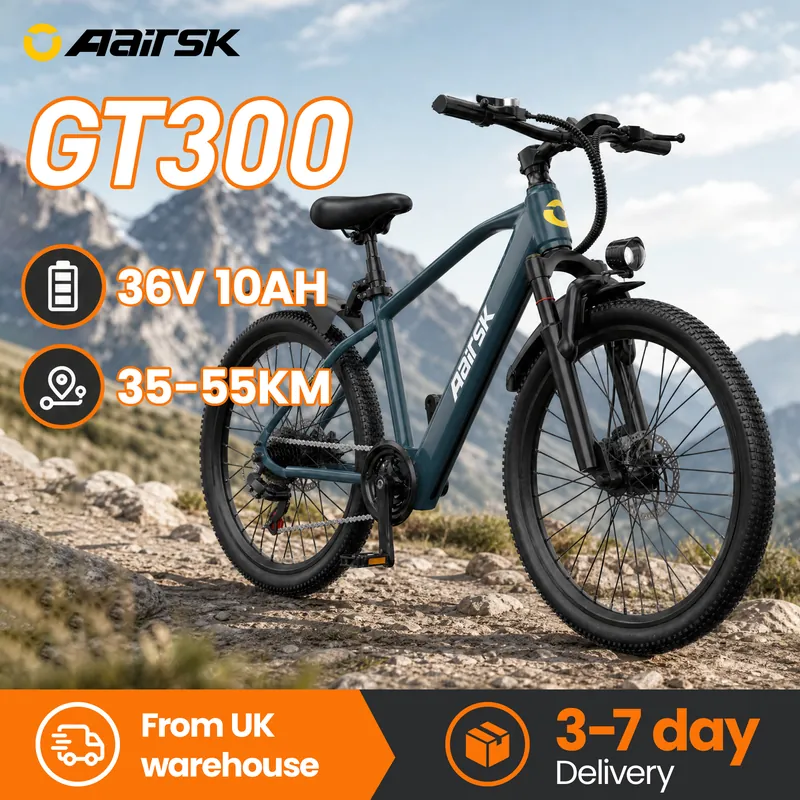
| Aairsk GT300 | 250W | 36V 10Ah | 26-inch | around £326 |
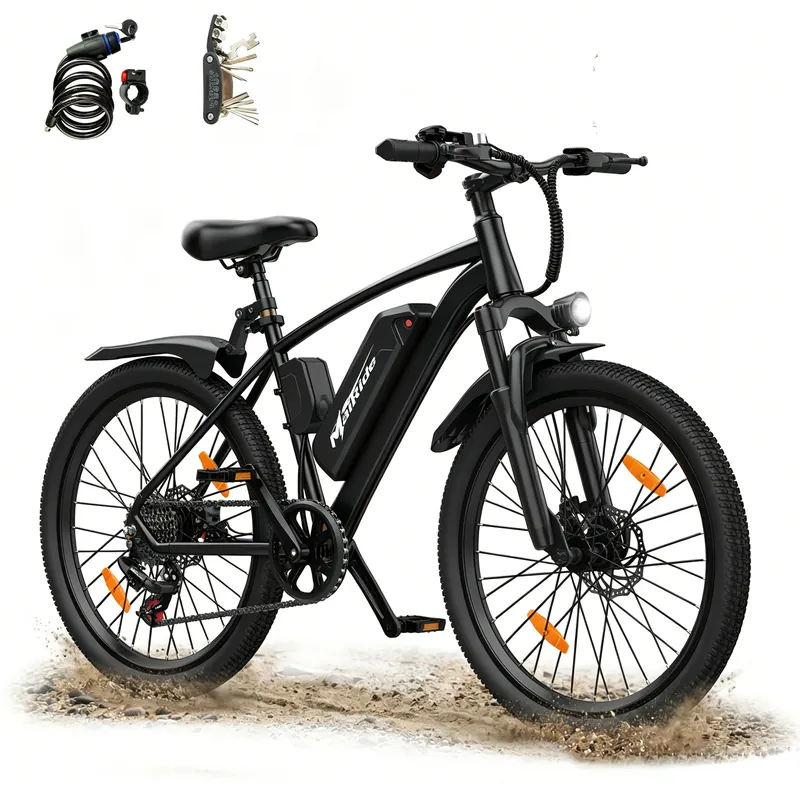
| Mairide Q7 | 250W | 36V 10Ah | 26-inch | around £371 |
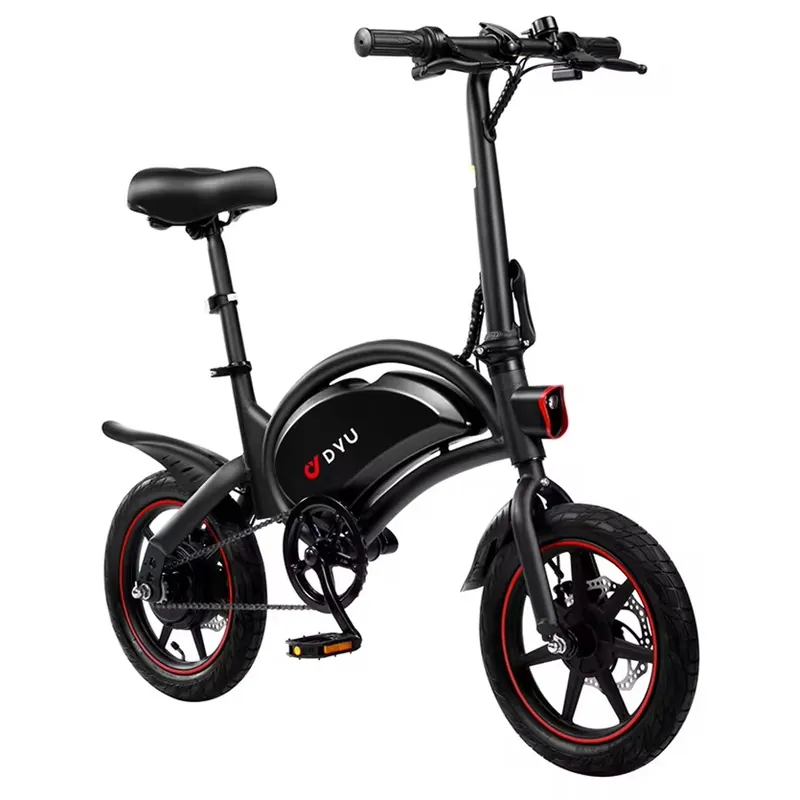
| DYU D3F | 250W | 36V 10.4Ah | 14-inch | around £369 |
All three are pedal-assist city bikes. The two 26-inch models ride like a normal hybrid with help on hills; the DYU is a small-wheel folder for short trips and mixed journeys on trains.
Prices move, so treat those as indicative and check the current figure on the product page.
What about 500W?
This is where people get caught out. A 500W motor is not an EAPC. It is above the 250W continuous limit, so the bike is a motor vehicle.
In practice, nobody is going to stop you on a quiet lane, and thousands of 500W bikes are ridden in the UK every day. But you should know the position you are in: if there is an incident, if an insurer asks, or if the police take an interest, the bike is not legal on the road, and your household insurance is unlikely to cover you.
Our honest advice: if you need the bike for a commute on public roads, buy 250W. If you want more power for off-road or private land use, buy what suits the land and keep it off the road.
Speed, throttles and the "off-road" button
Some listings mention a switch or a setting that raises the speed limit. That setting does not change the legal status of the bike. A bike capable of assisting beyond 15.5 mph, or capable of moving under throttle without pedalling, is not an EAPC regardless of which mode you leave it in.
The same applies to a throttle. Some e-bikes ship with one; on a public road, using it to move without pedalling takes the bike outside the EAPC definition.
Do you need insurance, a licence or a helmet?
For a genuine 250W EAPC, in England, Scotland and Wales: no licence, no registration, no vehicle tax, and no legal requirement to wear a helmet for an adult.
That last one deserves a caveat. Not being legally required is not the same as being sensible. A helmet is the cheapest piece of safety equipment you will buy and the one most likely to matter in a fall. We would wear one.
Insurance is optional for an EAPC, but worth considering. Many home contents policies will not cover an e-bike away from the home, and a bike worth £1,000 left outside a shop is a real risk. Specialist cycle insurance typically costs less than £10 a month for a bike in that range.
Note that Northern Ireland has its own rules and has historically been slower to adopt the same position on e-bikes. If you are in NI, check the current position with the Department for Infrastructure before relying on this guide.
What changed, and what is likely to change
The EAPC rules date from 1983 and were amended in 2015 to align the power and speed limits with the rest of Europe. They have been stable since.
There has been pressure to raise the 250W limit and to legalise throttle-assist bikes for people with mobility needs, and consultations have taken place. As of writing, nothing has changed in law. If a seller tells you "the limit is going up next year", treat that as sales talk until you see it in legislation.
The checklist before you buy
- Find the continuous rated power in the listing, not the peak. If it says 250W, you are in EAPC territory.
- Check the assistance cut-off speed. It should be around 25 km/h or 15.5 mph.
- Check whether there is a throttle and whether the bike can move without pedalling.
- If the listing is vague about any of the above, assume it is not an EAPC and ask the seller directly.
- If you need the bike for a road commute, do not buy anything above 250W, however good the price looks.
That is the whole of it. The law is not complicated; the market is just full of bikes that were never designed around it.